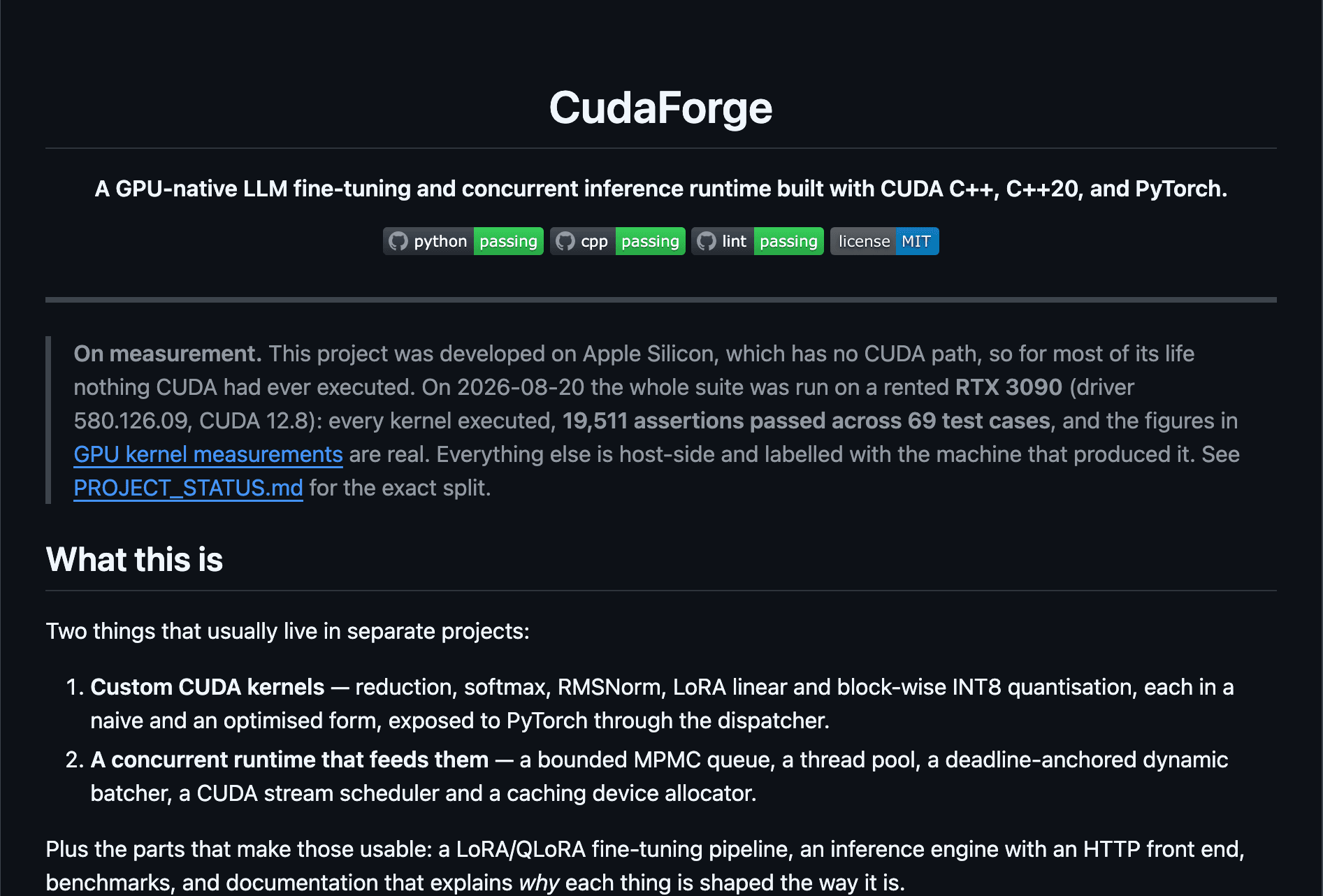
An LLM fine-tuning and concurrent inference runtime written from the kernels up — custom CUDA ops plus the systems layer that keeps them fed.
Hand-written kernels (reduction, softmax, RMSNorm, fused LoRA, INT8 quantise) in naive and optimised forms, exposed to PyTorch through the dispatcher.
A concurrent serving stack: bounded MPMC queue, thread pool, deadline-aware batcher, CUDA stream scheduler, and a caching device allocator.
Continuous batching cuts decode steps by 70% for a 1.44x wall-clock win at batch 32; speculative decoding stays lossless against the target distribution.
Verified on a rented RTX 3090 — 19,511 assertions across 69 test cases, clean under TSan, ASan, and UBSan.
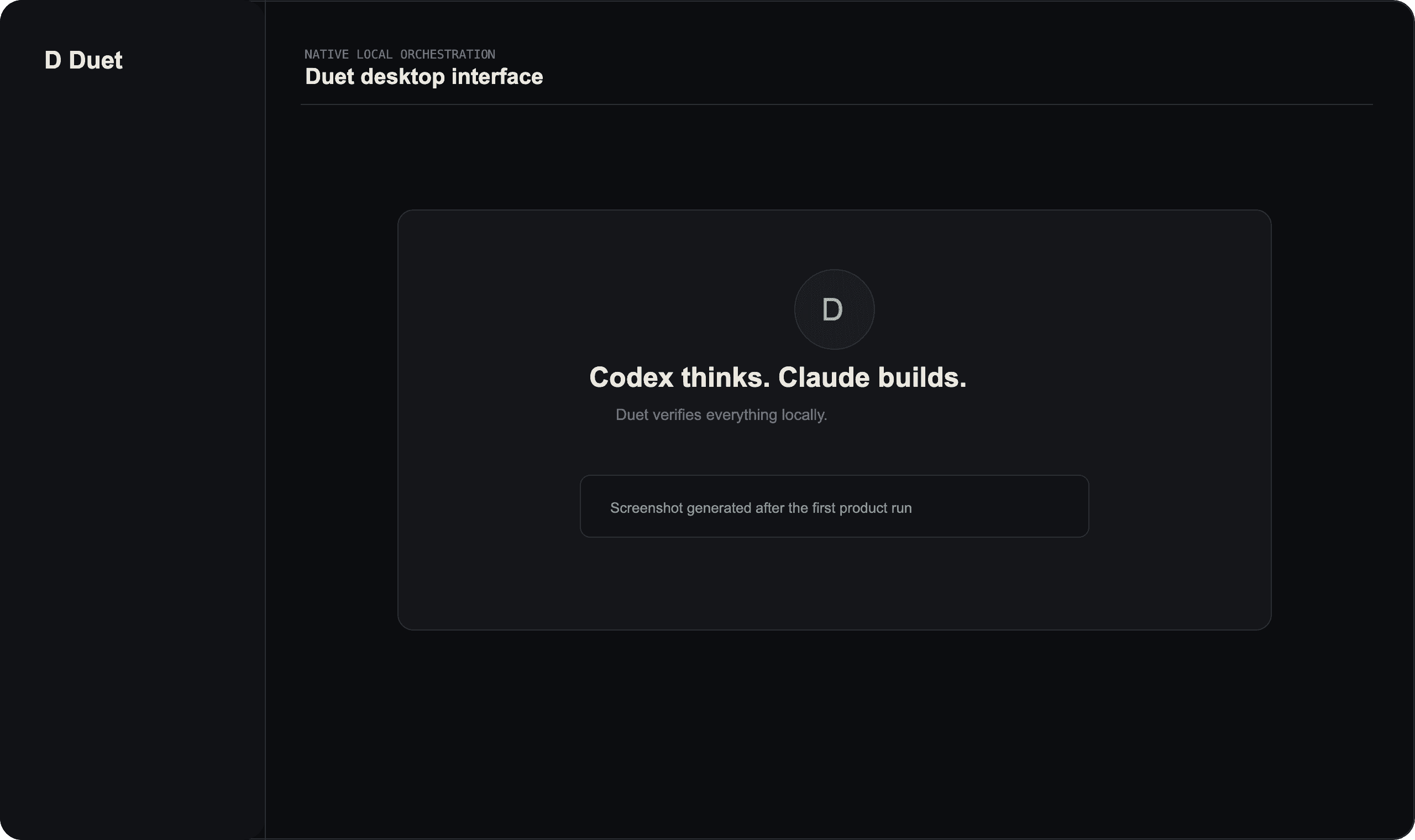
A local-first desktop orchestrator that pairs the Claude Code and Codex CLIs — one architects and reviews, the other implements and repairs, and the test suite settles the argument.
Every run lands in its own managed Git worktree; nothing touches your branch until you explicitly apply the patch.
Cancellable, timeout-bounded Tokio subprocesses stream typed lifecycle events straight into the UI.
Required tests and benchmarks run independently of model opinion — a glowing review never overrides a failing check.
Runs, stages, diffs, and raw logs persist in SQLite, so history survives a restart instead of silently going stale.
RustTauriTokioTypeScriptReactSQLiteVite
where it started
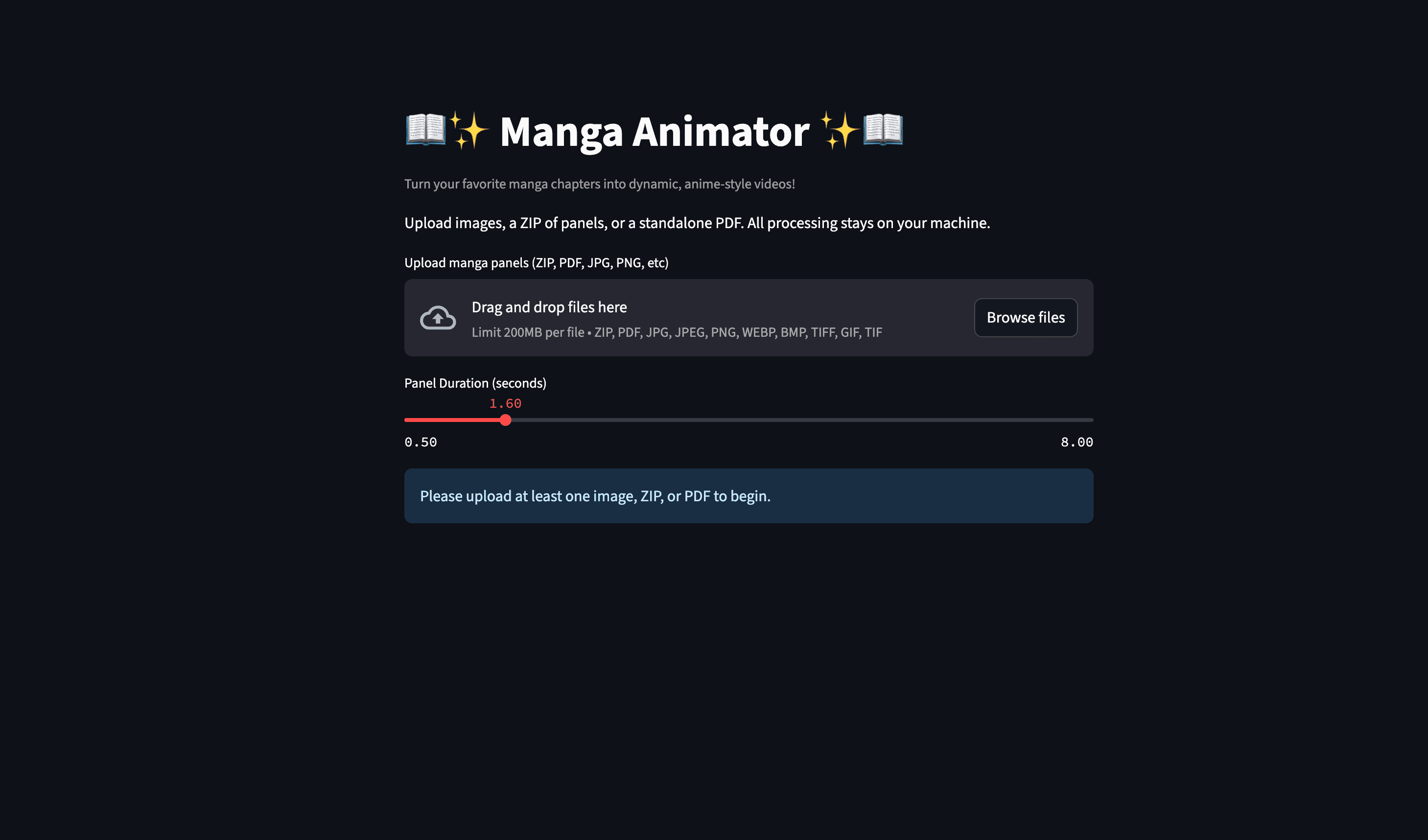
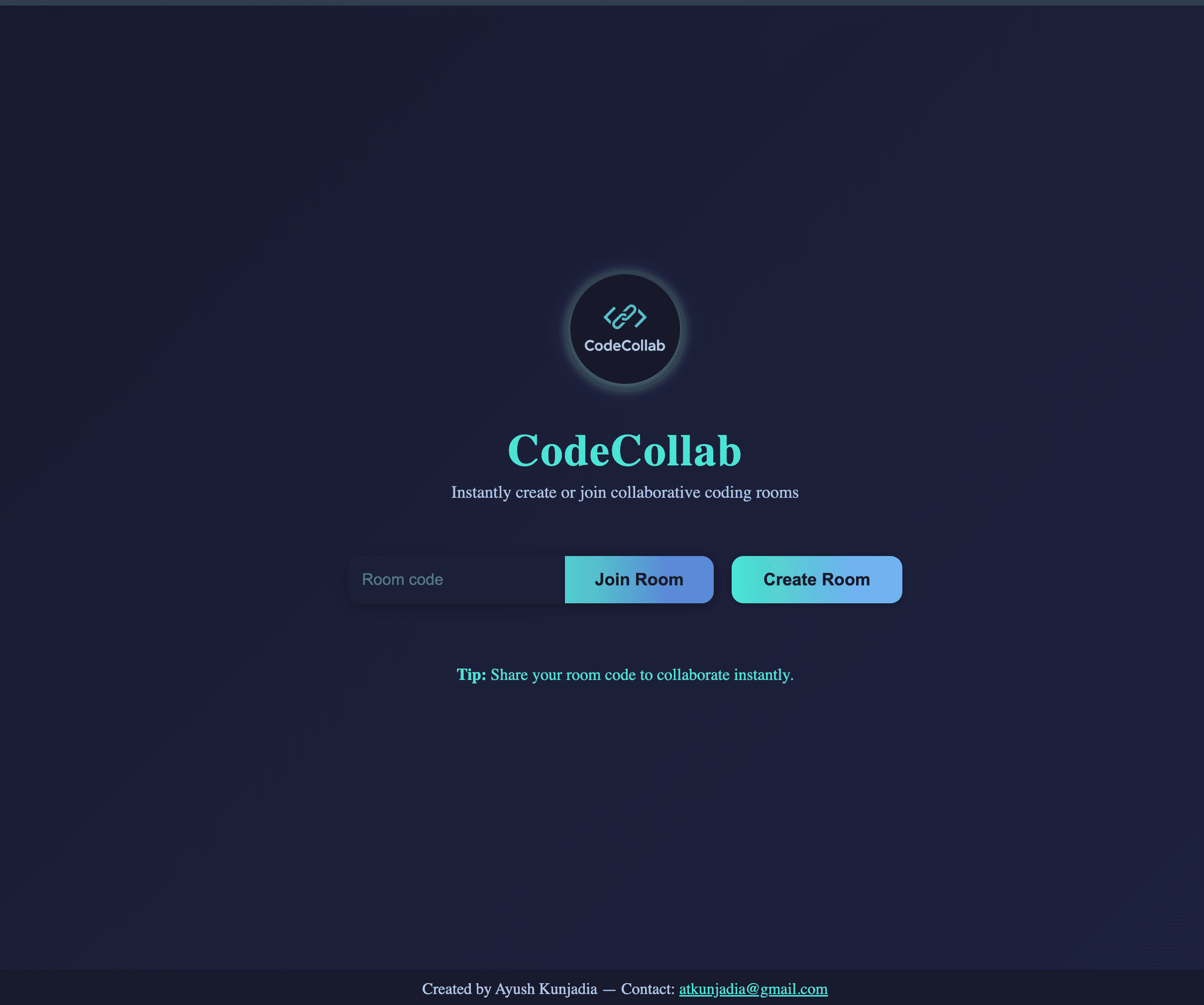
Starter projects that helped me learn how to code
The early builds where I figured things out — shipping, breaking, and fixing until each one stuck.